 70 GPH condensate pump
Aquastrong 70 GPH Condensate Pump
ASIN B0CPJ15BLL. Read our original fit analysis before checking the live Amazon offer.
A drain pump may enable a location without continuous gravity fall, but it adds lift limits, electricity, noise, cleaning and a failure point. The exact machine manual, plumbing design and local code must allow the arrangement.
As an Amazon Associate, we may earn from qualifying purchases. Purchase links appear only after exact model verification.
Compare flow at the actual lift, maximum head and horizontal run—not only zero-head flow. Verify reservoir, switch and alarm behavior, approved wastewater, tubing, check valve, venting, air gap and service access.
Generic HVAC condensate pumps are not automatically approved for ice-machine or bin drainage. Prefer a manufacturer-approved factory or accessory pump when available.
These exact Amazon listings are the practical starting point. Use the category checks below to confirm compatibility before ordering.
As an Amazon Associate, we may earn from qualifying purchases. Amazon availability and product details can change; verify the complete listing before ordering.
70 GPH condensate pumpASIN B0CPJ15BLL. Read our original fit analysis before checking the live Amazon offer.
 Compact condensate pump
ASIN B0DQPLPKMF. Read our original fit analysis before checking the live Amazon offer.
 144 GPH condensate pump
ASIN B0CWGKDLX9. Read our original fit analysis before checking the live Amazon offer.
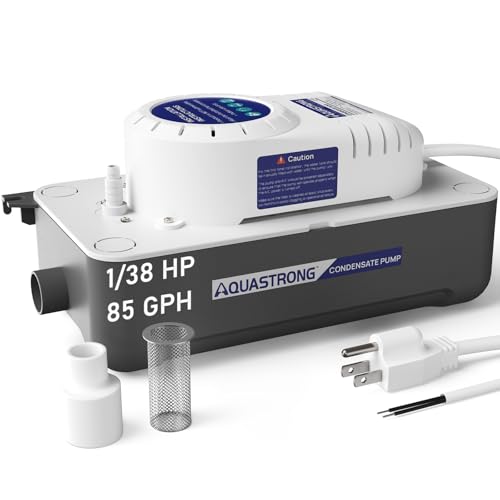 85 GPH condensate pump
ASIN B0BKZRN3ZG. Read our original fit analysis before checking the live Amazon offer.
 110 lb/day with pump
ASIN B0GXBR57LG. Read our original fit analysis before checking the live Amazon offer.
Daily production and storage capacity answer different questions. Production is the amount a machine can make over a stated period and test condition. Storage is the amount a bin can hold before its control pauses production. Record both. When a manufacturer provides output at several air and water temperatures, compare the condition closest to the proposed room. Do not rank one model's favorable-condition maximum against another model's warm-condition value.
Estimate busy-day demand from every use of ice, add a defensible allowance for routine losses, and examine the peak service window. A larger head can protect recovery, but oversizing without attention to storage, water treatment and cleaning creates its own cost. Use our machine sizing calculator to keep assumptions visible.
Before comparing prices, eliminate equipment that cannot be installed correctly. Check exact voltage, phase, breaker and connection; water pressure and temperature; potable-water inlet; drain type and air gap; condenser method; ventilation direction; service clearances; ice access; and the delivery route. An undercounter label does not guarantee safe enclosure. A modular head does not include a bin merely because a product photo shows one.
Drainage deserves early attention. Gravity systems need continuous fall to an approved receptor. A pump introduces lift limits, sound, cleaning and a failure point. Local rules and the current manual control. Use the fit finder for a first pass, then have qualified trades verify the plan.
Choose the ice for the job. Cube and crescent ice cover many beverages; nugget offers a soft texture; flake conforms to food displays and specialty uses; gourmet forms emphasize appearance and slower dilution. Confirm compatibility with the exact dispenser. Water treatment should address measured sediment, taste, chlorine and scale while preserving required flow.
Every machine needs a repeatable sanitation program. Favor designs whose food-zone parts, air filter and bin staff can access. Budget approved chemicals, cartridges and trained labor. Filtration can improve water conditions, but it does not replace cleaning, descaling or sanitizing. Read the cleaning guide before creating a maintenance budget.
Compare the complete installed package, not the head price. Include bin or dispenser, adapters, freight, placement, utility work, filtration, cartridges, energy, water, cleaning supplies, preventive service and downtime. Warranty terms can distinguish whole-machine coverage from longer component-only coverage. Verify the exact variant rather than repeating brand-wide marketing.
Local authorized service and parts access matter in a time-sensitive operation. Ask who will commission and service the model, what routine work staff may perform, and what backup ice source exists. Our three-year cost calculator helps compare assumptions without inventing a national utility rate.
| Question | Evidence |
|---|---|
| Capacity | Busy-day demand and warm-condition output |
| Storage | Usable bin capacity and peak reserve |
| Fit | Dimensions, clearances, airflow and access |
| Utilities | Electrical, water and drainage requirements |
| Ownership | Installed cost, sanitation, service and warranty |
Write the complete model and suffix on the project sheet. Attach the current specification sheet, installation manual, warranty and approved bin or dispenser list. Confirm certifications required by the authority having jurisdiction. Obtain an installation quote that names utility work instead of using a vague allowance. Have the operator sign off on scoop access, cleaning access, sound and heat in the finished room.